
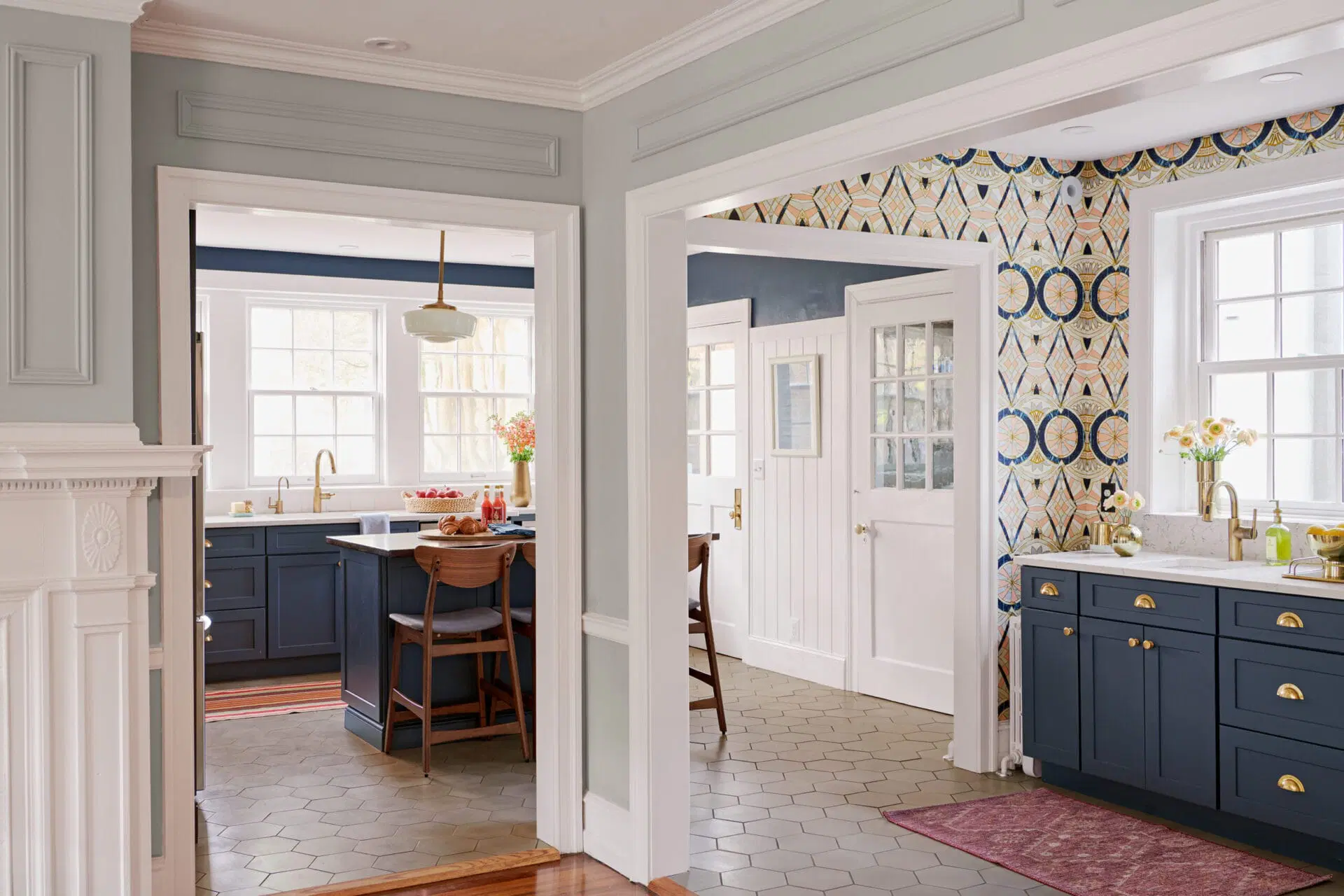
Doorway trim does more than cover the joint between drywall and a door frame. Its width, profile, finish, and relationship with nearby baseboards can change how finished an entire room feels. Good interior doorway trim ideas create clean transitions while supporting the architectural style already established throughout the house.
Start With the Right Trim Profile
Flat casing is popular because it works with modern, transitional, Scandinavian, and simple traditional rooms. Its straight edges create definition without drawing excessive attention to the doorway.
More decorative casing can include stepped edges, subtle curves, backband molding, or built-up layers. These details tend to suit interiors where crown molding, paneled walls, or traditional cabinetry already provide architectural depth.
The best profile usually repeats visual language found elsewhere rather than introducing an entirely new pattern.
Coordinate Door Trim With Baseboards
Door casing and baseboards meet at highly visible points, so their proportions should feel intentional. Thin casing paired with oversized baseboards may look awkward unless the contrast is part of a deliberate contemporary design.
People gathering room-transition ideas can pay particular attention to how casing terminates where it reaches the floor. A clean joint, plinth block, or carefully aligned profile often contributes more polish than adding another layer of decoration.
Let Trim Frame the View Beyond the Door
Open doorways naturally act like picture frames. Strong casing makes that effect even more noticeable, especially when the next room contains artwork, built-in cabinetry, an accent wall, or another obvious focal point.
In spaces where a doorway faces a hearth, hearth-inspired design references can provide ideas for balancing the visual weight of the opening with the feature beyond it. The casing doesn’t need to compete with the focal point; it should help guide attention toward it.
| Trim Style | Overall Look | Good Fit |
|---|---|---|
| Flat casing | Clean and simple | Modern rooms |
| Stepped casing | More detailed | Transitional homes |
| Wide molding | Formal presence | Traditional interiors |
Use Paint and Finish to Control Emphasis
Painting doorway trim the same color as the wall creates a subtle architectural outline. Using white or another contrasting trim color makes the doorway much more visible.
Wood casing introduces warmth and works particularly well when it coordinates with flooring, furniture, or exposed architectural elements. Studying exterior-to-interior design thinking may also help homeowners maintain consistency between a home’s broader architectural identity and its interior detailing.
A contrasting finish works best when repeated somewhere else. One isolated dark doorway in an otherwise light-trimmed house can look accidental.
Where Doorway Trim Choices Go Wrong
Too much ornament can make ordinary openings feel unnecessarily formal. Decorative corner blocks, oversized headers, and layered profiles may look attractive individually but become overwhelming when repeated on every doorway.
Another mistake is ignoring scale. Narrow doors with very wide casing can appear squeezed, while tiny trim around tall openings may lack enough presence. Measure the wall area surrounding the doorway before selecting molding. The goal is visual balance, not simply choosing the largest profile that fits.
Frequently Asked Questions
How wide should interior doorway trim be?
There is no single required width. The right proportion depends on ceiling height, doorway size, baseboard dimensions, and the amount of wall space around the opening.
Should every doorway use the same casing?
Consistency usually creates a polished result, but important rooms can receive slightly more detailed trim if the profiles clearly belong to the same design family.
Can doorway trim be darker than the walls?
Yes. Dark casing can create sharp architectural contrast, especially against pale walls, but repeating the finish on doors, windows, or nearby millwork usually makes the choice feel more intentional.
Finish the Opening With Purpose
Doorway trim works best when it quietly organizes the architecture around it. Choose a profile that matches the room’s character, coordinate its scale with baseboards, and decide whether paint should highlight or soften the opening. Small adjustments to casing width and finish can make transitions between rooms look considerably more complete.