
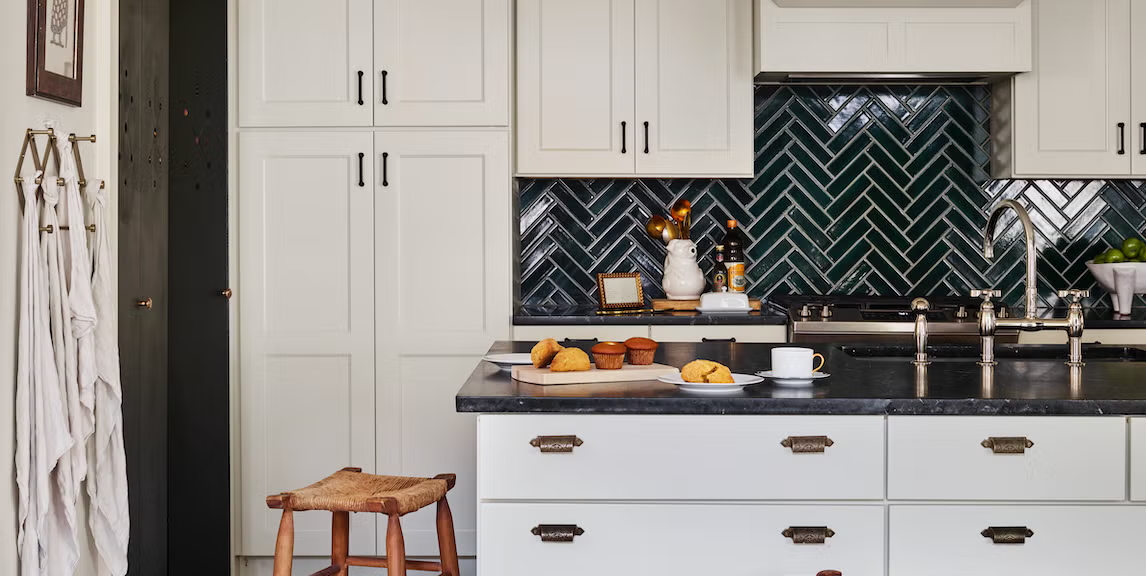
Matching every cabinet knob can look neat, but perfect repetition isn’t the only route to a polished kitchen, bathroom, or built-in. Cabinet knob mixing works best when the differences feel intentional. Combining knobs, pulls, finishes, or shapes can give cabinetry a more collected character while still keeping the overall design calm.
Create One Clear Rule Before Mixing Anything
Successful mixing usually begins with a simple connection. You might repeat one metal finish while changing shapes, or keep one knob style while introducing a second finish on a separate cabinet zone.
Looking at layered cabinet details can help illustrate why variation works better when one feature remains consistent. Without that visual connection, mixed hardware can quickly look like leftover pieces installed at random.
Separate Hardware by Function
One practical approach is using knobs on cabinet doors and pulls on drawers. Because the difference follows function, the eye understands the change immediately.
For larger drawers, longer pulls can also feel more proportional than small knobs. Upper cabinet doors can then carry quieter hardware.
Mix Finishes Through Distinct Cabinet Zones
A kitchen island offers an easy place to introduce a second finish. For example, perimeter cabinetry might use aged brass while an island uses dark bronze or black hardware.
Examples of custom kitchen styling often show that stronger contrasts are easier to manage when they’re tied to separate materials or colors. A painted island already reads as its own element, so a hardware change can reinforce that distinction.
| Mixing Approach | What Stays Consistent | Overall Effect |
|---|---|---|
| Knobs + pulls | Same finish | Subtle variation |
| Brass + black | Same shape family | Stronger contrast |
| Vintage + simple | Similar scale | Collected character |
| Island variation | Cabinet zone | Clear separation |
Vary Shape Without Losing Proportion
Round knobs, oval knobs, cup pulls, and slim bar pulls can live together if their scale feels related. Problems appear when one piece is visually much heavier than everything around it.
Small decorative knobs can work beautifully on a glass-front cabinet or narrow furniture-style door. Broader drawers may need something more substantial. Exploring collected home accents can provide useful inspiration for balancing small decorative details across a room.
Use Special Pieces Sparingly
A distinctive ceramic, stone, glass, or patterned knob has more impact when it appears in a limited location. A small pantry cabinet or freestanding hutch can handle character that might become busy across twenty kitchen doors.
Let Cabinet Style Set the Boundaries
Flat-panel cabinetry usually supports restrained hardware combinations. Traditional raised-panel doors can accommodate more ornament and variation because the cabinetry already has visual detail.
Color matters too. Dark green, blue, charcoal, and stained wood cabinets often support warm metals especially well, while bright white cabinetry gives almost any finish stronger contrast.
Common Mixing Mistakes to Avoid
The biggest mistake is changing finish, shape, size, and style at the same time without a connecting rule. Too many independent choices make the hardware compete for attention.
Another issue is ignoring placement. Even beautiful pieces can look awkward if knobs sit at inconsistent heights or pulls don’t align across adjacent drawers. Templates and careful measurements matter more once several hardware styles share the same cabinet run.
Frequently Asked Questions
How many cabinet hardware styles can I mix?
Two styles are usually easy to manage. A third can work in a larger room if it serves a clearly different cabinet type, furniture piece, or functional zone.
Should cabinet knobs match the faucet?
They don’t have to match exactly. The finishes should relate comfortably, though. Repeating the faucet finish somewhere else in the room can make a mixed-metal scheme feel intentional.
Can vintage knobs work with modern cabinets?
Yes. Simple modern cabinetry can provide a quiet background for vintage hardware. Keep the number of decorative pieces controlled so the contrast feels purposeful rather than random.
Build the Mix Around Repetition
Collected style doesn’t mean using unrelated pieces everywhere. Choose one repeating feature—finish, shape, proportion, or placement—and let the other details vary around it. Start with a small cabinet section before committing to an entire kitchen. If the combination looks balanced from across the room as well as up close, you’ve probably found the right mix.