
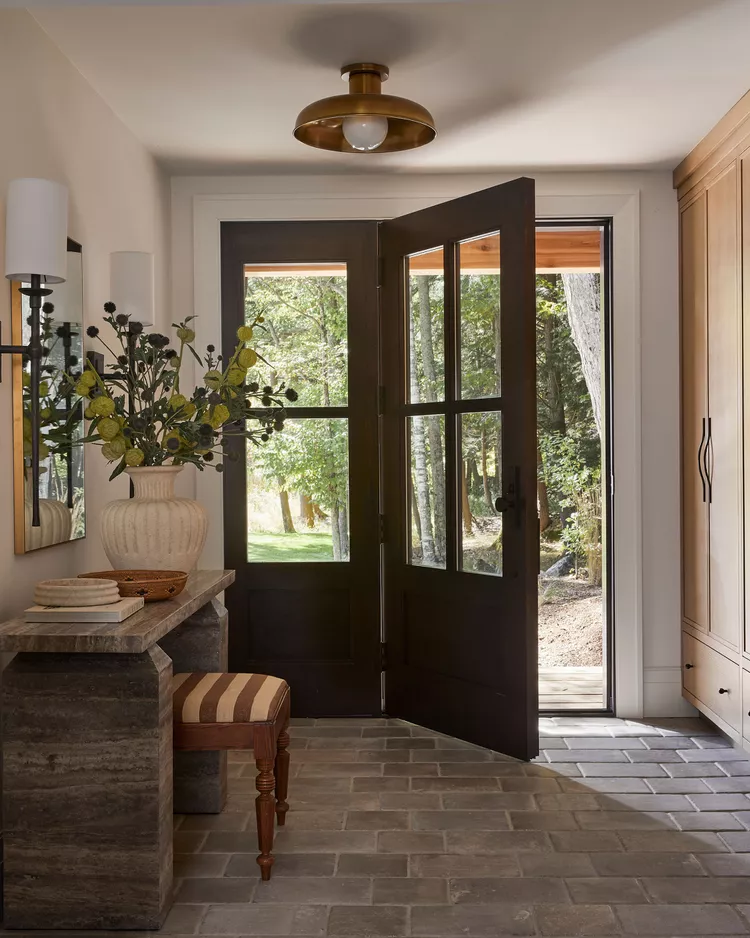
Wide doorways can make a home feel more open while improving movement between rooms. They provide extra clearance for wheelchairs, walkers, strollers, furniture, laundry baskets, and everyday traffic. Effective wide doorway ideas aren’t limited to making every opening oversized; the goal is to remove cramped transitions while keeping privacy, wall space, and structural needs in balance.
Identify the Most Important Traffic Routes
Begin with the pathways people use repeatedly. Openings between bedrooms and bathrooms, kitchens and dining areas, or hallways and main living spaces usually matter more than rarely used doors.
During general planning, homeowners may look through housing layout resources alongside floor plans and contractor guidance. Walk through the house while carrying something wide, such as a laundry basket. Places where you instinctively turn sideways are obvious candidates for improvement.
Measure Clear Passage, Not Just the Door
The stated size of a door isn’t always the same as the usable opening. Hinges, stops, handles, and door thickness can reduce actual clearance.
Consider Enlarged Openings Without Doors
Some room transitions don’t require a swinging door at all. A wider cased opening can improve circulation between a kitchen, family room, dining room, or other shared spaces.
Home layout decisions are often influenced by the property beyond the walls as well. General browsing around residential land planning may accompany renovation research when owners are thinking about how interior and exterior circulation connect.
Removing a door also eliminates the floor space needed for its swing. That can be especially helpful in narrow rooms where every square foot affects furniture placement.
| Opening Type | Main Advantage | Possible Tradeoff |
|---|---|---|
| Wide hinged door | Privacy remains | Needs swing space |
| Cased opening | Easy circulation | Less sound control |
| Pocket door | Saves floor area | Wall cavity required |
| Sliding door | Large opening possible | Needs adjacent wall space |
Use Sliding or Pocket Doors Selectively
A pocket door can provide a generous passage without occupying room space when opened. It may work well for bathrooms, closets, laundry rooms, and other locations where a hinged door causes congestion.
Sightlines deserve consideration too. Interior changes can affect how a home relates visually to patios and gardens, so landscape context ideas may become part of broader inspiration gathering. For the doorway itself, structural framing and hardware requirements should guide the final choice.
Sliding systems aren’t perfect everywhere. They may provide less sound isolation than a well-fitted hinged door, and pocket doors require usable wall cavities free from conflicting plumbing, wiring, or structural elements.
Protect Useful Wall Space
Making every opening wider can create an unexpected problem: fewer places for cabinets, switches, artwork, shelving, or furniture. This is especially relevant in compact houses.
A well-positioned opening may be more valuable than the maximum possible width. Shifting a doorway slightly can improve the route through a room without sacrificing an entire furniture wall.
Common Mistakes With Wider Openings
Homeowners sometimes focus only on the door and ignore what happens immediately beyond it. A generous doorway that leads directly into a narrow passage or blocked furniture arrangement doesn’t provide much practical improvement.
Another mistake is removing doors where acoustic or visual privacy still matters. Bedrooms, bathrooms, home offices, and utility rooms often benefit from closure. Wider movement paths should support how each room is actually used instead of applying the same solution throughout the house.
Frequently Asked Questions
Do wide doorways make small rooms feel larger?
They can. A broader opening extends sightlines between adjoining rooms and reduces the visual interruption created by narrow door frames, particularly in connected living and dining spaces.
Are pocket doors better than regular doors?
They solve different problems. Pocket doors save swing space, while conventional hinged doors are often simpler to install, maintain, and seal for sound. The wall structure may determine which option works.
Should every doorway in a home be widened?
Usually not. Prioritize frequently used routes and openings where extra clearance produces a meaningful benefit. Some doors already provide comfortable passage and don’t justify major construction.
Improve the Routes That Matter Most
Successful wide doorway ideas focus on movement rather than size alone. Watch how people travel through the home, identify pinched transitions, and preserve useful privacy and wall space where needed. A few strategically enlarged openings can improve circulation far more effectively than an expensive whole-house attempt to make every doorway identical.