

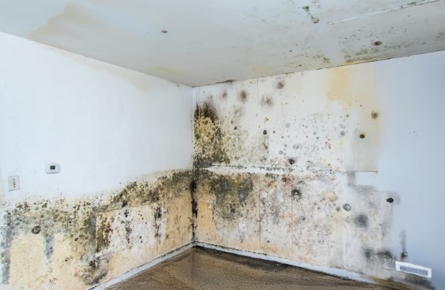
With the rare exception of a burst pipe, water damage usually goes undetected and compounds for months before a homeowner realizes there’s a problem.
Behind the walls around windows and doors
Caulking and metal flashing are used to seal window frames against the outside. Over time, both materials can deteriorate. When caulk cracks and flashing separates from the frame, rain seeps down the wall stud. Because weeping water can flow a long way before surfacing, the first indication of seepage might be a water stain seeping through the wall paneling. By then the wall framing and insulation can be soaked and probably spent six months or more drying out.
Under your kitchen appliances
The icemaker line on your refrigerator and the water supply line for your dishwasher fail at a greater rate than you may think. These plastic or braided supply lines degrade steadily, and the leaks they produce are frequently slow drips – enough to keep your subfloor saturated but not enough to escape from under the appliance where you’d see it.
Subflooring is generally made of OSB or plywood, and it doesn’t need a flood to fail. Sustained moisture over long periods can cause it to swell, delaminate, and eventually rot. The insides of the cupboards remain damp and unventilated, and once moisture is present, mold spores germinate quickly, often within 24 to 48 hours. Pull it out once a year and look at the floor beneath the dishwasher. If the material feels soft underfoot near your appliance, that’s worth investigating.
In your bathroom walls
The shower tiles may appear waterproof, but in reality, it’s the grout and the membrane beneath the tiles that are doing the real work. Once the grout gets micro-cracks or the membrane starts failing, water seeps through the tiles with every shower you take. And it has no place else to go – it simply remains trapped in the wall, seeping into the wooden studs and the paper surface of the drywall.
This kind of damage is dangerous because the surface of the wall can appear perfectly fine for a long time. The tile remains stuck, there is no paint bubbling, and everything seems in order. The first warning signs are typically a soft area on the wall when you press it, a persistent musty odor, or grout that keeps getting stained no matter how often you clean it. Flooding and water damage are already estimated to account for over 29% of all home insurance claims, with an average claim of over $11,600 (Insurance Information Institute) and failed bathroom walls being a key source of those claims.
Your basement or crawl space walls
Water can enter a foundation even without a crack, as long as there is enough pressure. For example, if the soil grading slopes toward your house, rainwater will accumulate against the foundation wall. If you add clogged gutters to the mix, that overflow will be deposited right at the base of your home. All that hydrostatic pressure will push moisture through the porous concrete block. The first indicator of this will be a seemingly inconsequential white powdery residue on your wall. It’s called efflorescence.
Efflorescence is not a minor issue. It’s a symptom of water actively moving through the concrete and depositing dissolved salts on the surface as it dries. Allow the seepage to continue and your crawl space or basement will remain at elevated humidity – the perfect environment for mold to begin growing on your wood framing and insulation.
The attic above your chimney and roof valleys
Chimney flashing fails quietly. The metal degrades, the sealant pulls back, and a small amount of water gets into the attic with each rain. Since the attic is dark and seldom visited, this goes unnoticed for years. The situation is worse because the water seldom stays where it enters – it runs down rafters and interior wall framing, so the visible damage may show up two rooms away from the actual entry point.
If you see water stains on a ceiling and cannot locate the source, get someone up on the roof to examine the flashing around every chimney, pipe penetration, and valley. A thermal imaging camera can detect temperature differences in walls and ceilings caused by hidden moisture without any demolition.
How to catch these problems early
Certain routines can help you identify hidden leaks before they result in severe issues. Keep an eye on your monthly water bill – a sudden unexplained increase combined with no change in your usage is typically a sign that water is escaping somewhere in your system. Install smart leak detectors underneath cabinets and around the water heater; they’ll send an alert at the first hint of moisture. Finally, trust persistent musty smells – that’s the scent of organic matter decomposing in the presence of water, and it won’t simply go away on its own.
If you come across soft drywall, rotted subfloor material, or visible mold in any of the above areas, it’s not enough to just dry the area using some ventilation and a fan. Get in touch with a certified expert in Water damage restoration Charlotte, NC to appraise the extent of the damage and source of the dampness, effectively dry the structure, and prevent the spread of mold to areas that are out of sight.
Hidden water damage is gradual, and reacting to it on time is just a question of knowing where to search.