
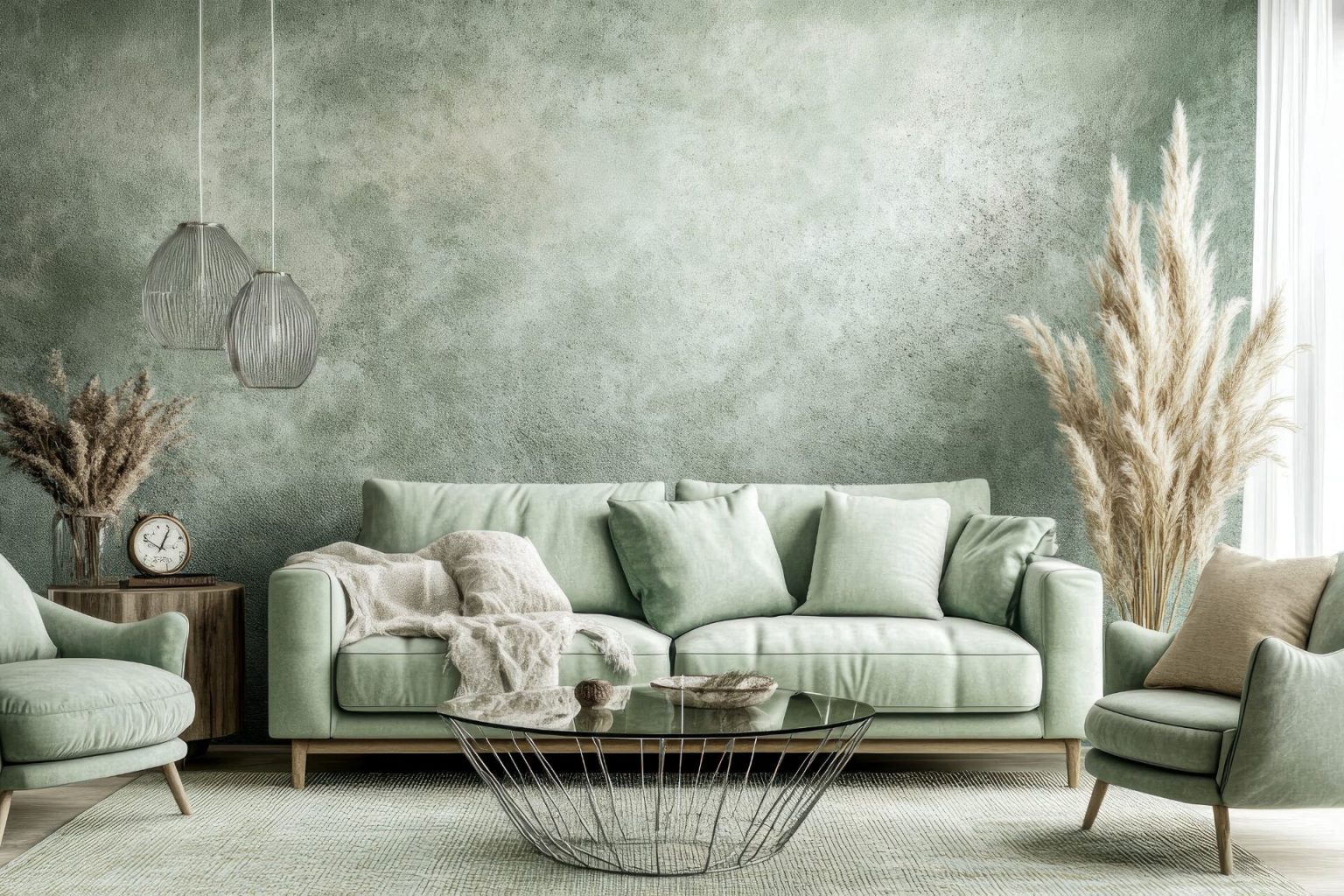
Venetian plaster can give a wall dimension without turning it into a heavily textured feature. Thin layers, gentle tonal shifts, and controlled polishing create depth that changes as light crosses the surface. Good Venetian plaster ideas depend less on dramatic color and more on placement, sheen, and the way nearby materials respond to the finish.
Choose Depth Before Choosing Drama
A successful plaster wall doesn’t need extreme contrast. Soft ivory, limestone beige, mushroom, muted gray, and warm putty tones can reveal plenty of movement once several layers begin reflecting light differently.
The effect becomes more noticeable near windows and directional lighting. During the day, the wall may look calm and matte from one position yet slightly luminous when viewed from another.
That changing appearance is one reason restrained colors often work better than highly saturated ones. The material itself already provides visual interest.
Give One Surface a Clear Role
Using Venetian plaster everywhere can reduce its impact. A carefully selected wall behind a dining table, bed, fireplace, or console often feels more intentional.
While collecting broader decorating references, pay attention to where the eye naturally lands when entering a room. That sightline is often a better guide for feature-wall placement than simply choosing the largest surface.
In open-plan interiors, plaster can also define a zone without introducing another paint color or physical divider.
Coordinate Plaster With Light
Light determines how much depth Venetian plaster reveals. Soft daylight usually emphasizes tonal variation, while wall washers and angled lamps can strengthen highlights after dark.
Room design examples can help when considering the relationship between lighting and wall treatment, but your own room should remain the deciding factor. Ceiling height, window direction, and fixture position will change the result.
| Lighting Type | Effect on Plaster | Useful Location |
|---|---|---|
| Side daylight | Reveals movement | Living rooms |
| Wall washer | Highlights layers | Feature walls |
| Pendant light | Creates focused glow | Dining areas |
| Soft ambient light | Reduces contrast | Bedrooms |
Avoid placing harsh lighting too close to an imperfectly prepared surface. Strong grazing light can reveal irregularities you may not want emphasized.
Pair Polished Surfaces With Matte Materials
Venetian plaster becomes more interesting when surrounded by contrasting textures. A softly polished wall can sit beside matte oak, brushed metal, wool upholstery, natural stone, or flat-painted cabinetry.
Browsing relaxed home styling ideas may offer useful composition cues, yet the key is balance. If every material reflects light strongly, the room can start feeling overly formal.
Use Metallic Details Sparingly
Bronze, aged brass, or dark metal can provide a crisp edge against plaster. Small details such as a lamp base, picture frame, or cabinet handle are usually enough.
Large amounts of reflective metal may compete with the wall’s subtler sheen.
Mistakes That Flatten the Effect
A frequent mistake is selecting a finish solely from a close-up sample. Venetian plaster is experienced across an entire wall, where natural light exposes gradual differences between one area and another.
Over-polishing can also make a room feel harder than intended. If you want quiet depth rather than a glossy statement, keep the sheen controlled and combine the wall with softer fabrics and less reflective flooring.
Preparation matters too. A refined finish won’t hide every defect underneath it.
Frequently Asked Questions
Is Venetian plaster always shiny?
No. Its appearance can range from relatively soft and matte to noticeably polished. Application technique, compression, finishing method, and the intended design all affect the final level of sheen.
Which rooms suit Venetian plaster best?
Living rooms, dining rooms, hallways, bedrooms, and carefully chosen feature walls are common possibilities. The strongest location is usually one where changing light can reveal the material’s depth.
Does Venetian plaster need bold furniture?
No. Simple furniture often works better because the wall already adds visual complexity. Clean shapes and quiet materials give the plaster enough space to remain noticeable.
Make Subtlety the Main Feature
Venetian plaster works best when its depth is discovered gradually rather than announced immediately. Start with a restrained color, consider how light reaches the surface, and use surrounding materials to create contrast. The result can feel rich and architectural without depending on loud color or excessive decoration.