
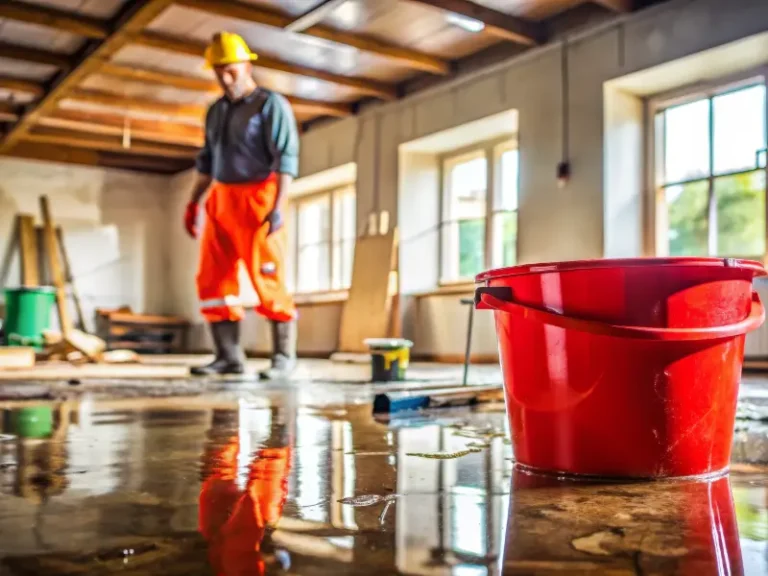
In general, contractors don’t have the background needed to navigate the nuances of a disaster-struck property. On the other hand, a good restoration professional knows how to identify and eliminate hazards (black mold, chemical residue, asbestos, for example), mainly those the average contractor might not even know to look for. They can also identify the chemicals used by arsonists in a fire and the fingerprint residue left by forensics after a crime. They also know how those hazards entered your home and how to prevent them from entering again.
The 24-48 Hour Window Is Real
Hidden restoration costs often increase with secondary damage. Mold can start growing in moist drywall within one to two days. Smoke residue becomes more difficult to remove the longer it remains on surfaces. The Federal Emergency Management Agency reports that as little as an inch of flood water causes an average of $25,000 in damage to a home – but also that prompt action is assumed.
So emergency response time is a valid metric to use when screening potential contractors, not just a marketing ploy. In fact, when you’re doing your homework in advance of any emergency, you should pose those straight-shooting questions: Do you dispatch first responders 24/7? How long does it usually take your crews to get to a site? What if your best people are already out in the field?
When the answers are clear, confident, and backed by real systems—dispatch logs, average response times, crew availability protocols—you’re talking to a company that treats urgency as a core operational standard, not a selling point. Invictus Restoration is built on that foundation: rapid response isn’t a value-add; it’s the baseline expectation for every call.
What IICRC Certification Actually Tells You
The Institute of Inspection Cleaning and Restoration Certification establishes the guidelines for how water damage, mold, and fire residue should be appropriately treated. If a business has current IICRC certifications, it means their specialists have been educated to ANSI standards – not just standard building practices, but the explicit standards for structural drying, mold mitigation, and content restoration.
This is more important than you might think. Psychrometrics – the study of how air temperature and moisture behave within construction materials – is what determines whether a building has been effectively dried, or if it’s only superficially dry. An unqualified specialist may extract residual water and call it a day. An IICRC-certified specialist uses high-capacity dehumidifiers and air blowers, takes readings over multiple visits, and records every step. That record is your protection should a mold dispute arise half a year later.
Ask for certification numbers. Look them up on the IICRC’s online database. A reputable firm will have no problems with this.
How They Communicate With Your Insurance Adjuster
Here is the part of the process that most homeowners forget to consider until it’s causing problems. The restoration company you hire is essentially a partner to your insurance adjuster throughout the life of your claim. The way they communicate and the kind of paperwork they produce has a direct impact on how your settlement goes down.
A reputable restoration company will use industry-standard estimating software (Xactimate is the most widely used, and many insurance companies also use it). When the two sides are both on the same page technically, you get in fewer disputes and get more approvals. Getting an estimate scribbled on a piece of note paper from your contractor is only going to cause obstacles through the claim.
Also, ask if they do direct billing to the insurer. The more they can handle the relationship directly, the less time you’ll spend trying to match invoices with the management of a broken house.
Ask if the company has ever done loss assessments before, and if they will work as your advocate during the adjuster’s site visit. Some companies will, and it can directly impact how much damage makes it onto the report.
Mitigation and Reconstruction Under One Roof
Many homeowners are not aware that they are hiring a mitigation company for cleanup and then must find a separate contractor for rebuilding. This is where projects slow down, miscommunications occur, and costs go up.
A full-service restoration company will do the whole job – water mitigation, biohazard cleanup if necessary, structural work, and final reconstruction. There is one contact person, one consistent record of what was found and what was done, and no gap between the crew that dried your walls and the crew that rebuilds them.
When you’re interviewing companies, ask outright: Do you do the remediation phase and the rebuild? If they say they subcontract out the construction, determine who is handling that relationship and who is on the hook if something goes wrong.
The Insurance Question Most People Skip
Before you sign anything, verify that the company is covered under pollution and mold liability insurance. That’s commonly excluded from standard general liability policies, and most homeowners don’t learn that the policy doesn’t exist until they file a claim. A company performing mold remediation without mold liability coverage is a company that can’t protect you financially in the event of a failed remediation.
Also, verify they’re licensed and bonded in your area. Licensing requirements vary by jurisdiction, but bonding is a basic sign that the company has some financial and accountability footing.
The right restoration professional is a technician, a project manager, and an insurance advocate all in one. The good news is that finding someone who is truly strong in all three isn’t any more difficult than finding a general contractor – you just have to know what to ask them.